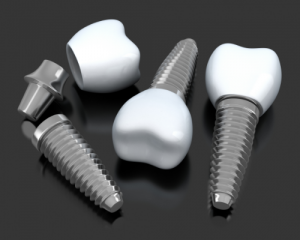


How to Take Care of Your Dental Implants
 Cleaning and taking care of your implant is just as important as cleaning your natural teeth. Here are some things you should know about caring for your implant.
Your implant and your natural teeth are similar because they both rely on healthy tissue for support and both can build up plaque. It’s important to remove that plaque because it can develop into an infection. If the infection isn’t properly treated, it can result in a loss of bone around the implant which could progress to the loss of the implant itself.
It’s important to get your teeth cleaned on a regular basis so your dental hygienist can get that biofilm off your teeth and keep your teeth infection-free. As always, you should be brushing your teeth and flossing twice a day. Never use your teeth, especially your implant as “scissors” to open anything.
Dental implants are the closest thing you can get to real and natural teeth. They don’t require any special products or treatment. Just a simple brush and floss will do the job. They are also long lasting. If they are properly cared for, they can last a lifetime, avoiding any further dental work down the road.
With a dental implant, you can still enjoy all your favorite foods. It will not loosen or fall out if you are chewing something hard.
Overall, dental implants are meant to make life better and easier, not to add issues or interrupt your life. You don’t have to go out of your way to take care of them – a simple brush and floss will ensure that they improve your overall quality of life for many years to come.
If you think a dental implant may be right for you, call Pittsburgh Oral Surgery, PC at 412-661-7690 to schedule a consultation with us.
 turies and throughout cultures around the world there is evidence of attempts at replacing missing teeth with various objects and materials.
 A recent study by the American Cancer Society reports that oral cancer cases in men is expected to increase in 2017 by 4%, while the rate of new cases among women stays the same year over year. “Oral Cancer”, which is a common way to refer to all head and neck cancers, involves cancer of the oral cavity, lips, tongue, pharynx and esophagus.
 The Procedure Itself
 Wisdom teeth were once an extremely valuable asset to our ancestors. When a typical diet consisted of chewy plants and uncooked meat, third molars (wisdom teeth), which fit easily into our ancestors’ larger jaws, were absolutely necessary. Wisdom teeth were the evolutionary answer to the need for chewing power to combat excessive wear.
 There is exciting news in
  While it is true that the most obvious effect of missing teeth is a gap in your smile, missing teeth can cause other problems that you might not be immediately aware of. For example, did you know that for every missing tooth you have you lose 10 percent of your chewing ability? Read on to get a better idea of how a missing tooth can affect your life.
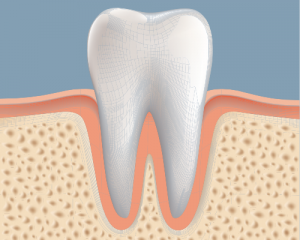 In the case of a simple, single lost tooth, the ideal course of action is to not lose excess bone. In this process, sterile, demineralized human bone granules are packed into the tooth socket immediately after tooth extraction. This procedure is very simple, and does not add anything to your recovery time. Over the next several weeks, your own bone will fill the tooth socket and preserve the bone height enough for you to have the area restored.